
Arterial Revascularization
Minimally Invasive Vascular Care with Advanced Technology
At DFW Surgical Partners, our Endovascular Surgery program specializes in the diagnosis and treatment of diseases affecting the arteries and veins using minimally invasive, image-guided techniques. These procedures are performed through small punctures rather than large incisions, allowing patients to experience less pain, faster recovery, and reduced risk of complications compared to traditional open surgery.
Our experienced vascular specialists utilize advanced imaging and catheter-based technologies to restore and improve blood flow throughout the body. Common conditions treated with endovascular procedures include peripheral artery disease (PAD), critical limb ischemia, venous insufficiency, and dialysis access maintenance.

Common Endovascular Procedures
- Angioplasty and Stenting – Opens narrowed or blocked arteries to improve circulation.
- Atherectomy – Removes plaque buildup from inside the arteries to restore normal blood flow.
- Embolization – Minimally invasive procedure used to block abnormal blood flow or reduce pain, such as in geniculate artery embolization for knee arthritis.
- Thrombectomy and Thrombolysis – Removes or dissolves blood clots in arteries or veins.
- Dialysis Access Creation and Maintenance – Establishes or restores vascular access for patients undergoing hemodialysis.
Why Choose Endovascular Surgery at DFW Surgical Partners
Our center combines state-of-the-art technology with the skill and experience of board-certified vascular surgeons to deliver personalized, evidence-based care. Every patient receives a tailored treatment plan designed to achieve the best possible outcome while minimizing downtime and maximizing comfort.
With an on-site accredited surgical facility, DFW Surgical Partners offers patients safe, efficient, and cost-effective outpatient care in a modern, compassionate environment.
Arterial Revascularization
Minimally invasive and surgical options to restore blood flow to the legs and feet—performed safely and efficiently at our ambulatory surgery center.
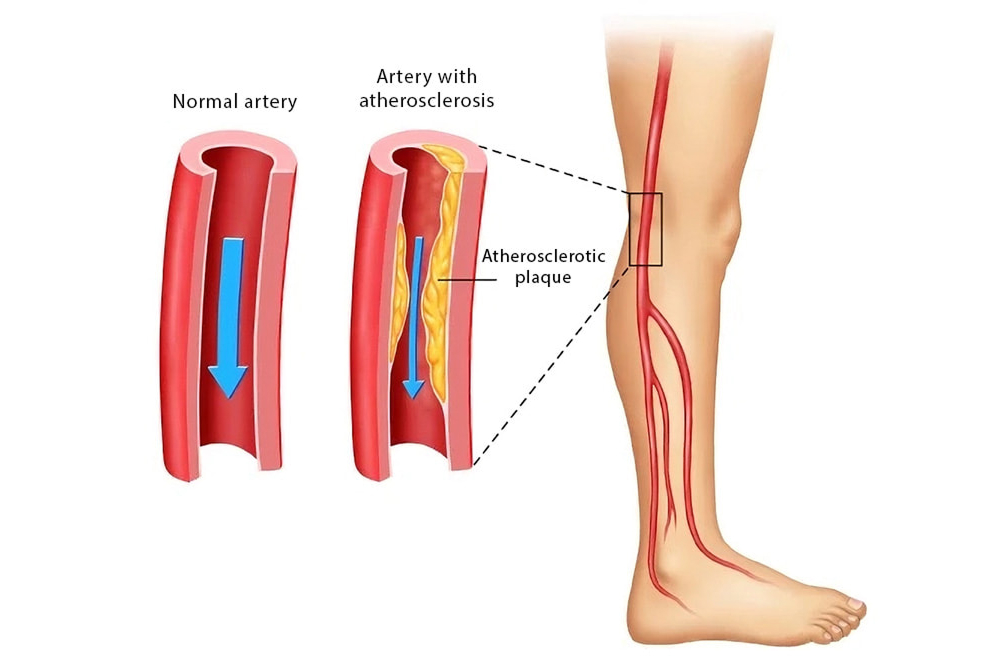
Illustration: narrowed artery with restored flow after revascularization.
Same‑day procedures
Most endovascular treatments are outpatient with a typical stay of 2–4 hours.
Board‑certified specialists
Interventional vascular and cardiology teams with ASC experience.
Insurance friendly
We work with most major plans and offer transparent pricing options.
When is revascularization considered?
Your clinician may recommend restoring blood flow if you have symptoms, wounds, or test results showing significant blockages in the arteries of the legs and feet.
- Peripheral Artery Disease (PAD) of legs/feet
- Non-healing wounds or rest pain
- Dialysis access issues (selected cases)
- Lifestyle-limiting claudication (pain with walking)
- Critical limb ischemia
Balloon angioplasty
Stent placement
Tiny metal scaffold helps keep the artery open.
Atherectomy
Stent placement
Tiny metal scaffold helps keep the artery open.
Targeted endarterectomy + stent
Combines a tiny surgical opening with endovascular tools.
Patch angioplasty
Autologous vein bypass
Prosthetic graft bypass
Before your procedure
- Clinic evaluation, review of imaging (ultrasound/CTA/MRA).
- Medication and allergy check; fasting instructions if sedation is planned.
- We’ll discuss benefits, risks, and alternatives; bring your questions!
Day of procedure
- Local anesthesia; light IV sedation for comfort in most endovascular cases.
- Tiny access through wrist or groin; image‑guided treatment.
- Observation in recovery; most patients go home the same day.
Benefits
- Improves blood flow and walking distance
- Helps wounds heal and relieves rest pain
- Often same‑day, minimally invasive
Risks
- Bleeding or bruising at the access site
- Allergic reaction to contrast dye
- Re‑narrowing (restenosis) over time
Recovery
- Home the same day for most endovascular cases
- Light walking encouraged; avoid heavy lifting 48–72 hours
- Follow‑up ultrasound and clinic visit